What Is Contrast on a TV?
Last updated: October 2026
🕒 4 min read
Disclosure: This article does not contain affiliate or sponsored links. SignalVetted may still reference specific products or brands for informational purposes only.
You may see a contrast ratio on a spec list or in a review and wonder what it tells you. So, what is contrast on a TV? RTINGS describes it as the brightness difference between white and black, and this guide follows RTINGS’ contrast ratio test page to explain it. It covers what contrast is and how RTINGS measures it. It follows that one page, so it does not compare panel types, give settings advice or name TVs.
Table of Contents
What Contrast Means on a TV
RTINGS describes contrast as the brightness difference between white and black. The contrast ratio is the ratio between the brightest white and the darkest black a display can produce.
RTINGS says contrast is written as X:1, where X is how many times brighter white is than black. As its example, RTINGS says a 4000:1 contrast ratio would mean the TV puts out white that is four thousand times brighter than its black.
Why Contrast Matters
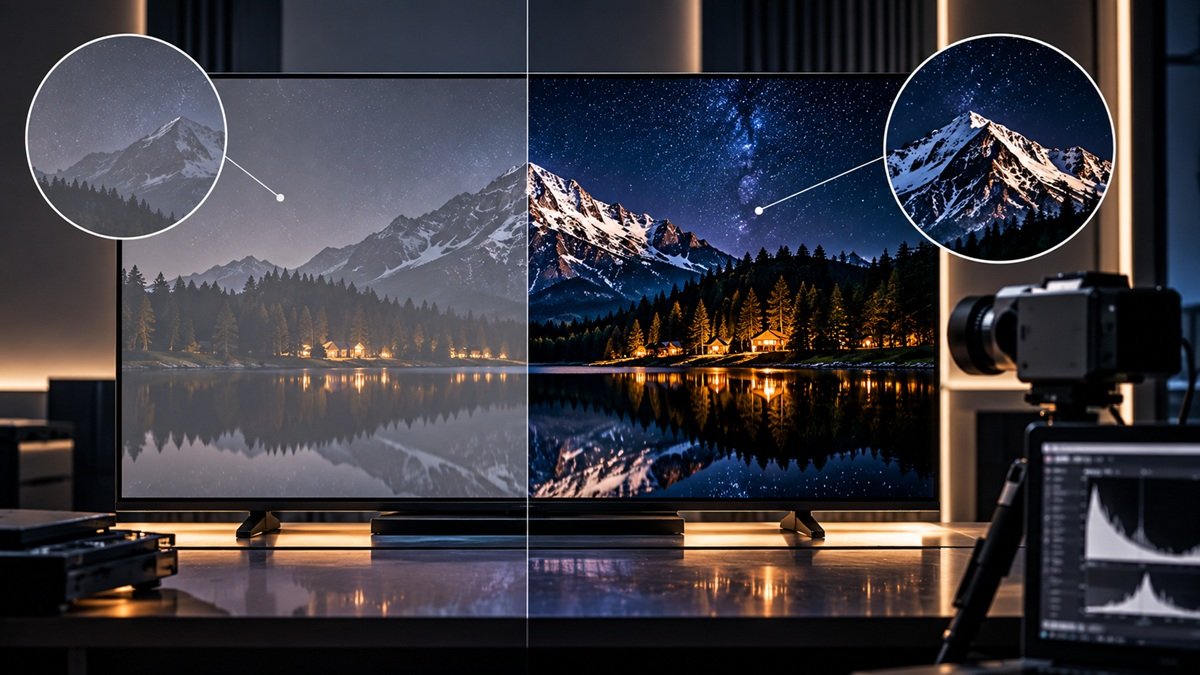
RTINGS says a higher contrast ratio means a TV can show deeper blacks and brighter whites at the same time. In HDR, that means bright highlights stand out even in relatively dark scenes.
For more on HDR and how it differs from SDR, see our explainer on what HDR on a TV is.
On when it matters, RTINGS says always, but especially when you are watching dark scenes in a dark room. In bright rooms, RTINGS says the difference in contrast is less obvious, because bright light reflecting off the screen increases the brightness of blacks. It adds that the screen’s finish and anti-reflective coating have a greater impact on perceived contrast in a bright room.
RTINGS’ conclusion is that with low contrast, blacks look gray in a dark room and bright highlights do not stand out well.
How RTINGS Measures Contrast
This page, Updated Mar 26, 2025, describes the test in a few steps. RTINGS puts the TV into its post-calibration settings, then adjusts the backlight so the white area in the center of its test image is as close as possible to 200 cd/m2. That white measurement is the one used for the contrast calculation.
According to this page, Updated Mar 26, 2025, RTINGS then measures the light the TV puts out at spots on each side of the cave opening in the test image, using the image and its mirror flip. RTINGS says this is done so edge-lit TVs and TVs with poor uniformity are measured fairly. That gives six measurements, two white and four black. RTINGS divides the average of the white by the average of the black to get the contrast result.
This page, Updated Mar 26, 2025, says RTINGS runs the test twice. One run measures native contrast, which is the panel only, without processing such as local dimming. The other measures contrast with local dimming turned on at the best setting RTINGS found.
On this page, Updated Mar 26, 2025, RTINGS also explains why it still measures native contrast. Local dimming is not perfect and has downsides such as blooming, so native contrast shows how good the TV will look when the dimming features cannot keep up. For how local dimming works, see our guide on what local dimming is.
What RTINGS Counts as Good Value on This Page
This page, Updated Mar 26, 2025, lists RTINGS’ own good-value marks for contrast: above 5,500 for native contrast and above 80,000 for contrast with local dimming. These are RTINGS’ criteria on that page, not a figure we suggest you shop by.
Tested Units and Test Versions
RTINGS says contrast may vary a bit between units of LED TVs. The unit you buy may have slightly higher or lower contrast than the one RTINGS tested, even if the model is the same.
This page, Updated Mar 26, 2025, describes the test as part of RTINGS’ 2.0 test update. It says the test images and measurement points changed, so the results are not comparable with the earlier method.
Frequently Asked Questions
What is contrast on a TV?
RTINGS describes contrast as the brightness difference between white and black. The contrast ratio is the ratio between the brightest white and the darkest black a display can produce, written as X:1. RTINGS says a 4000:1 ratio would mean the white is four thousand times brighter than the black.
How does RTINGS measure TV contrast?
This page, Updated Mar 26, 2025, says RTINGS sets the white area of its test image as close as possible to 200 cd/m2, takes six measurements, two white and four black, and divides the average white by the average black. It runs the test for native contrast and again for contrast with local dimming.
When does contrast matter most?
RTINGS says contrast matters always, but especially when watching dark scenes in a dark room. In bright rooms, it says the difference is less obvious.

Nridi
Editor, SignalVetted
This article does not report independent product testing.
✅ Based on RTINGS’ contrast ratio test page, Updated Mar 26, 2025.