Are Samsung OLED TVs Worth It? The Honest Verdict

Are Samsung OLED TVs Worth It? The Honest Verdict

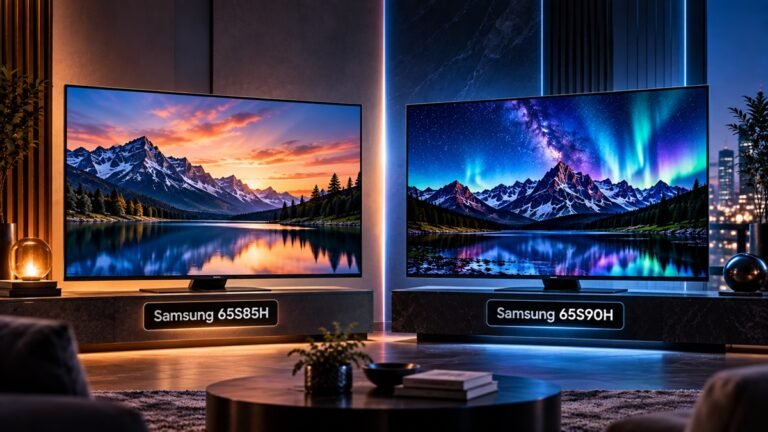
If you’ve already decided OLED itself is worth the premium, the next question narrows fast: are Samsung OLED TVs worth it specifically, or would you get more genuine OLED for the money from a different brand? Samsung’s own 65-inch OLED lineup spans two distinct tiers — the budget-focused 65S85H and the mid-flagship 65S90H — and treating “Samsung OLED” as one single answer skips over a real gap between them.
Is OLED Worth It in 2026? The Honest Verdict

Is OLED Worth It in 2026? The Honest Verdict

OLED costs more than LED or QLED at the same screen size, and the internet has spent years repeating "burn-in" as a reason to think twice. Neither of those facts is made up — but neither one, on its own, answers whether OLED is worth it for you specifically in 2026. That's the actual question this investigation sets out to answer: not "is OLED good" in the abstract, but whether the price premium and the real, non-zero burn-in risk are worth accepting for what OLED's picture-quality advantages actually deliver in ordinary use.

Samsung OLED Buying Guide: Which 65-Inch Tier Fits?

Samsung OLED Buying Guide: Which 65-Inch Tier Fits?

Two model numbers, one confusing choice: the 65S85H and the 65S90H both carry Samsung's OLED branding, and neither is simply a smaller or larger version of the other. This Samsung OLED buying guide exists because the gap between them shows up in daily use, not on a spec sheet's surface — a shopper comparing the two side by side on a retail page can easily miss what actually separates a 65S85H from a 65S90H. Both trace back to the same OLED foundation this site covers in our full OLED TV guide, so this piece narrows in specifically on how Samsung splits its own 65-inch range into a budget tier and a step-up tier.

LG OLED Buying Guide: Which 65-Inch Tier Is Right?

LG OLED Buying Guide: Which 65-Inch Tier Is Right?

LG's current 65-inch OLED lineup isn't one television — it's two meaningfully different tiers, and picking between them matters more than picking LG in the first place. This LG OLED buying guide walks through what actually separates the OLED65B6GUA, LG's budget entry point, from the OLED65C6, its mid-flagship step-up, so the choice comes from what each tier does differently rather than a guess based on price alone. Both models share the same core OLED foundation covered in our full OLED TV guide, but LG's own internal tier structure deserves its own explanation, since what separates these two specific models isn't always obvious from a spec sheet alone.

How Long Do OLED TVs Last? Lifespan vs. Burn-In

How Long Do OLED TVs Last? Lifespan vs. Burn-In

"How long it lasts" and "will it burn in" sound like the same question, but they're actually two different ones with two different answers. If you're weighing OLED's price premium and want to know how long do OLED TVs last before real-world degradation becomes noticeable — separate from the burn-in risk specifically — this article covers that broader lifespan question directly. For the fuller picture of where that fits into the overall buying decision, our full OLED TV guide covers the current lineup separately from this longevity-focused explainer.

How to Prevent OLED Burn-In: What Actually Works

How to Prevent OLED Burn-In: What Actually Works

Burn-in is real, but it's also far more preventable than its reputation suggests. If you're researching how to prevent OLED burn-in because the risk has been mentioned somewhere in your research and you want practical guidance rather than either false reassurance or exaggerated alarm, that's exactly what this article covers — what actually causes it, and what meaningfully reduces the real-world risk. For the fuller picture of where that risk fits into the overall OLED buying decision, our full OLED TV guide covers the current lineup separately from this prevention-focused explainer.

OLED Panel Types Explained: WOLED vs QD-OLED

OLED Panel Types Explained: WOLED vs QD-OLED

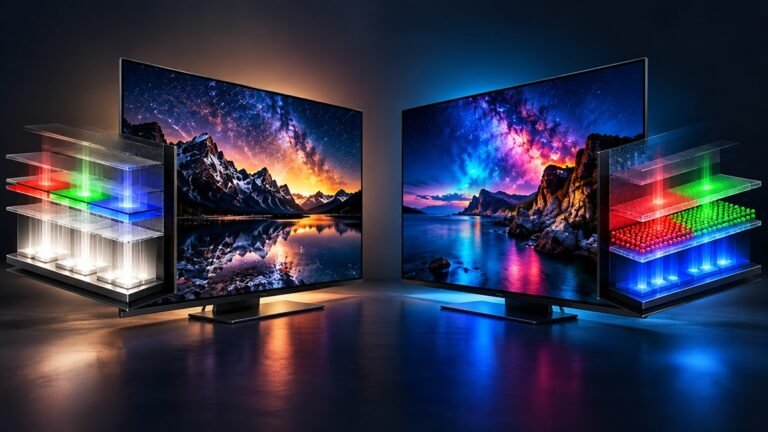
Not every OLED panel is built the same way — and which construction a given TV uses doesn't always match the assumption you'd make from the brand name on the box. With OLED panel types explained plainly, the two constructions doing almost all the work in the current 65-inch market are WOLED and QD-OLED, and they get to the same basic self-emissive result — pixels that make their own light — through meaningfully different means.

What Is OLED TV Technology? How It Actually Works

What Is OLED TV Technology? How It Actually Works

Every pixel in an OLED TV makes its own light, and that single fact explains almost everything else about how the technology behaves. If you've run into the term "OLED" while researching a new TV and want to know what is OLED TV technology actually doing differently from the LED or LCD set you might already own, this is the plain-mechanism explanation — not a buying recommendation, just what's actually happening behind the screen. For a full look at where OLED sits price-wise once you understand the mechanism, our full OLED TV guide covers the current lineup separately from this explainer.

Best QLED TVs (2026): The Complete Buying Guide

Best QLED TVs (2026): The Complete Buying Guide

"Best QLED TV" hides three separate questions inside it. Which brand — Samsung, TCL, or Hisense — actually fits your room and budget. Which tier of that brand's current QLED lineup is worth paying for. And what size makes sense once the first two are settled. This guide walks through all three in order, then gets specific: four real picks spanning all three brands and three tiers, what each one gives up compared to the tier above it, and where QLED sits relative to OLED if you haven't settled on a panel technology yet. If you're not sure QLED is the right technology at all, start with "What Is QLED TV?" below; if you've already decided and just want the shortlist, skip to the Top Picks table further down.

Best OLED TVs (2026): The Complete Buying Guide

Best OLED TVs (2026): The Complete Buying Guide

"Best OLED TV" isn't really one question — it's three. Which brand fits how you already watch and game. Which tier of that brand's lineup is actually worth paying for. And what size makes sense in your room. Skip any one of those and you'll end up comparing TVs that were never really competing with each other in the first place.