
Are Samsung OLED TVs Worth It?
Last updated: September 2026
🕒 8 min read
Disclosure: This article does not contain affiliate or sponsored links. SignalVetted may still reference specific products or brands for informational purposes only.
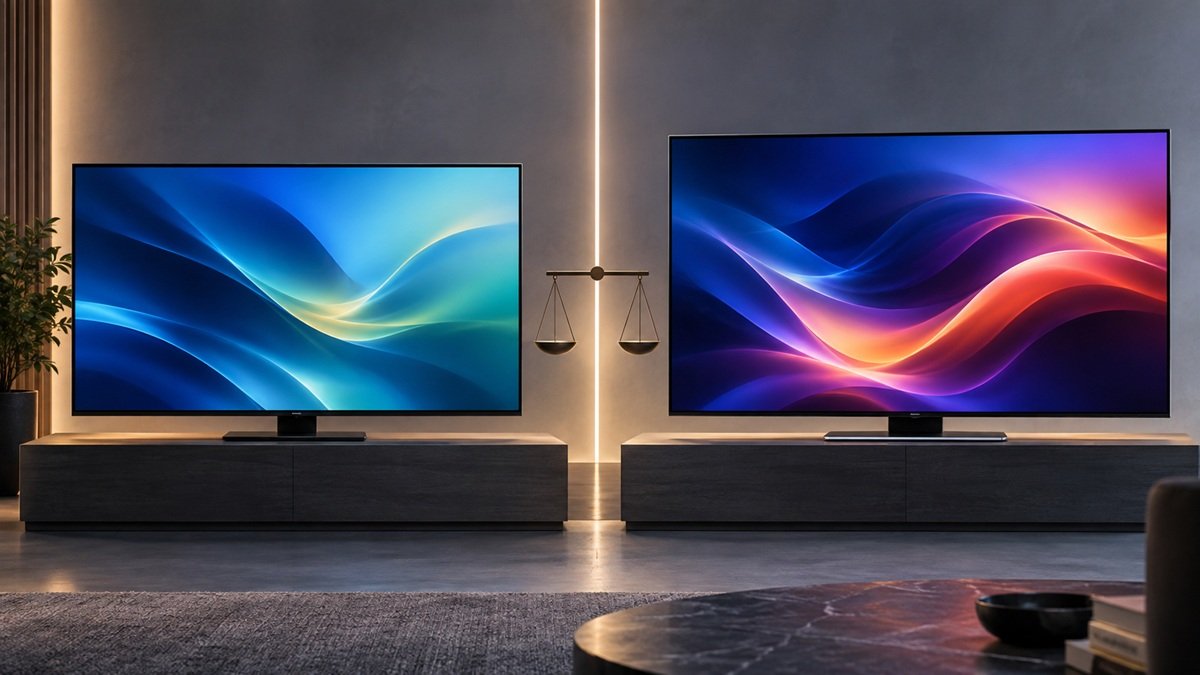
If you’ve already decided OLED itself is worth the premium, the next question narrows fast: are Samsung OLED TVs worth it specifically, or would you get more genuine OLED for the money from a different brand? Samsung’s own 65-inch OLED lineup spans two distinct tiers — the budget-focused 65S85H and the mid-flagship 65S90H — and treating “Samsung OLED” as one single answer skips over a real gap between them. This investigation looks at what each tier actually offers, where the evidence holds up cleanly, and where it’s still incomplete, rather than assuming a brand-wide verdict follows automatically from OLED being worth it in general.
We’re not starting from an assumption that Samsung’s implementation is equal to — or weaker than — competing brands. The evidence here is what a shopper choosing between Samsung’s own two tiers, or deciding whether to look elsewhere entirely, actually needs before spending at this price point.
Table of Contents
What We’re Actually Investigating
This isn’t an investigation into whether OLED technology itself holds up — that’s the starting premise, not the question. The specific question is narrower: does Samsung’s own OLED implementation, across its budget and mid-flagship tiers, deliver genuine value at each respective price point, or does a shopper get a meaningfully weaker experience from Samsung specifically than OLED technology in general can offer? If you’re weighing Samsung against LG model-by-model rather than asking about Samsung’s lineup as a whole, our Samsung OLED buying guide is the more detailed starting point for that narrower comparison.
Framing it this way keeps the investigation honest in both directions: a tier that doesn’t earn its price doesn’t get a pass just because it’s still real OLED, and a genuine differentiator doesn’t get ignored just because it sits at a higher price point.
This also isn’t a re-run of the burn-in and price-premium questions already investigated for OLED as a category. Both of Samsung’s tiers carry the same OLED-wide considerations already covered in depth elsewhere — the price premium over LED and QLED, and the non-zero but usage-dependent burn-in risk shared by every emissive-pixel display, Samsung’s included. Repeating that full analysis here wouldn’t add anything; what this investigation adds is specific to Samsung’s own lineup, not to OLED as a technology.
The Evidence
What both Samsung tiers actually share
Both the 65S85H and the 65S90H use a WOLED panel, per the corrected specification data now on file for each model and independently corroborated by TechRadar’s reporting on Samsung’s 2026 panel switch and FlatpanelsHD’s 2026 Samsung OLED lineup coverage. That correction matters here specifically: it means both of Samsung’s 65-inch OLED tiers share the same fundamental per-pixel-emission mechanism already established as genuine for OLED broadly — true black levels, wide viewing angles, and fast pixel response that don’t depend on which brand’s processor sits on top of the panel. For more on how WOLED construction works mechanically, see RTINGS’ WOLED vs. QD-OLED explainer.
That shared foundation is also why “is Samsung OLED as good as LG OLED” doesn’t have one clean answer at the panel-technology level: both companies build OLED panels on the same underlying emissive-pixel mechanism, and the real differences between them show up in processing, refresh-rate ceiling, and feature sets layered on top — not in whether the black levels are real OLED black levels to begin with.
Where Samsung’s two tiers actually diverge
Everything built around that shared panel is where the two tiers pull apart. The 65S85H runs an older NQ4 AI Gen2 processor with 4K support up to 120Hz — a real, workable spec set for its price point, not a compromised one. The 65S90H steps up to a newer Gen3 processor, a higher 165Hz refresh ceiling, and adds a Glare Free coating aimed specifically at brighter-room viewing — a feature the budget tier doesn’t carry at all, confirmed on Samsung’s own OLED highlights page and independently tested by TechRadar’s side-by-side glare comparison. That’s a concrete difference in capability between the two tiers, not a marketing distinction dressed up as one.
A full head-to-head against LG’s own OLED lineup is something this investigation deliberately doesn’t attempt — that lives on its own page, our LG OLED vs Samsung OLED comparison, which reports RTINGS’ head-to-head of one tested pair (the LG C6 and the Samsung S90H) rather than a brand-wide verdict, so any comparison here stays general. Based on publicly available specification data, what can be said honestly is that Samsung’s mid-flagship tier is specced competitively against equivalent-tier OLEDs from other brands on paper — processor generation and refresh ceiling are the two dimensions that tend to separate a mid-flagship OLED from a budget one, regardless of manufacturer.
Where the Evidence Is Mixed or Limited
The honest limit sits mostly at the budget tier. The 65S85H’s older processor generation and lower refresh ceiling are real trade-offs, not just marketing gaps — a buyer choosing it over the 65S90H is accepting a deliberately different spec sheet, not a slightly slower version of the same experience. That’s a fair trade at a lower price point, but it’s worth naming specifically rather than treating “still OLED” as if it closes the gap on its own. Our full Samsung 65S85H review covers exactly where that budget-tier trade-off shows up in practice.
Gaming is one place that trade-off is worth being specific about rather than left vague. The 65S85H’s VRR support at up to 120Hz is fully usable for most console gaming, but a buyer specifically chasing the highest refresh ceiling for competitive play is the clearest case for stepping up to the 65S90H’s 165Hz instead — this isn’t a difference that only shows up on a spec sheet and never in practice.
There’s a second limit worth stating plainly: this investigation doesn’t have independent, third-party lab testing confirming either model’s real-world picture-quality performance beyond specification data and the panel-sourcing reporting cited above — a distinction worth naming rather than glossing over.
Our Verdict: Are Samsung OLED TVs Worth It?
Conditionally, yes — but which tier makes sense depends on what you actually need, and the two Samsung tiers aren’t equivalent enough to treat as one answer. Both share the same core OLED advantages: true per-pixel black levels, wide viewing angles, and fast response, the same properties already established as genuine for OLED broadly. Neither is a compromised or lesser version of real OLED.
The 65S90H is the stronger-evidenced pick specifically for buyers in brighter rooms, gamers who want the higher refresh ceiling, or anyone who wants the newer processor generation — the Glare Free coating and 165Hz ceiling are genuine, sourced differentiators, not incremental spec-sheet padding. Our full Samsung 65S90H review covers that case in depth.
The 65S85H remains a legitimate choice, not a compromised fallback — it’s a real trade of processor generation and refresh ceiling for a meaningfully lower price, and that trade is honest rather than a corner cut. For a reader specifically shopping at the lower end of this price range, our guide to the best OLED TVs under $1,000 is the more direct starting point.
What this verdict deliberately doesn’t do is settle whether Samsung’s OLED lineup, at either tier, beats LG’s equivalent tier outright — that comparison isn’t resolved by the evidence available here, and asserting it anyway would be reaching past what this investigation can actually back.
Neither tier changes the two OLED-wide considerations covered elsewhere: the price premium over LED and QLED, and the usage-dependent burn-in risk shared by every emissive-pixel panel, Samsung’s included. Those considerations don’t tip this verdict one way or the other on their own — they’re part of the broader OLED decision a reader has likely already made before narrowing down to Samsung specifically, and this investigation isn’t the place to relitigate them.
Who This Verdict Applies To — and Who It Doesn’t
This verdict applies most directly to a buyer who’s already comfortable with OLED’s price premium and burn-in profile, and is now deciding specifically within Samsung’s lineup — not choosing between OLED and a different display technology altogether. For that buyer, both Samsung tiers deliver genuine OLED picture quality; the decision is which spec set and price point fits, not whether Samsung counts as real OLED.
It applies less cleanly to two groups. A buyer who hasn’t yet decided whether OLED itself is worth it should start further back before narrowing to a specific brand. And a buyer set on a direct, sourced Samsung-vs-LG verdict at the same tier won’t find that resolved here — that comparison isn’t available as sourced evidence yet, and this investigation stays honest about that gap rather than reaching for an answer it doesn’t have.
Within Samsung’s own lineup, the split is fairly concrete: brighter-room viewers and refresh-rate-sensitive gamers are the clearest fit for the 65S90H, while a buyer whose room already has decent light control and whose gaming is casual rather than competitive gets the same core OLED experience from the 65S85H at a real price saving. For the fuller lineup view once you’ve settled on OLED generally, our full OLED TV guide covers the current picks in more depth than a brand-specific investigation can.
Frequently Asked Questions
Are Samsung OLED TVs worth it?
Conditionally, yes, for both of Samsung’s 65-inch OLED tiers — the budget 65S85H and mid-flagship 65S90H both deliver genuine OLED picture-quality characteristics. Which one is worth it for you depends on refresh-rate needs, room lighting, and budget, not on one tier being a lesser version of the other.
Is the Samsung 65S90H’s Glare Free coating actually worth it?
Based on Samsung’s own specification data and independent third-party testing, the Glare Free coating is designed specifically to reduce glare in brighter rooms — a genuine, sourced feature rather than a marketing label. It matters most in a room with meaningful ambient light; it’s a smaller factor in a room with good light control already.
Is Samsung OLED as good as LG OLED?
Both companies build OLED panels on the same core emissive-pixel mechanism, so the fundamental picture-quality mechanism doesn’t differ at that level. A specific, sourced head-to-head between Samsung’s and LG’s equivalent-tier models isn’t available as evidence in this investigation yet — treat either brand as ahead only once that comparison exists, not before.

Nridi
Editor, SignalVetted
This article does not report independent product testing.
✅ Based on manufacturer specification data.