
What Is a Mini LED TV? What It Is and Isn’t
Last updated: October 2026
🕒 4 min read
Disclosure: This article does not contain affiliate or sponsored links. SignalVetted may still reference specific products or brands for informational purposes only.
“Mini LED” on a TV box sounds like a specific technology, but the name is looser than it seems. So what is a Mini LED TV? According to RTINGS, most Mini LED TVs use a backlight made of many thousands of much smaller LEDs, which lets the TV dim the backlight in many separate zones.
This page covers what RTINGS says Mini LED is and isn’t, how it compares with a regular LED TV, and why zone count isn’t the whole story. It follows RTINGS’ Mini LED explainer, which shows “Updated Dec 08, 2025”.
Table of Contents
What Is a Mini LED TV?
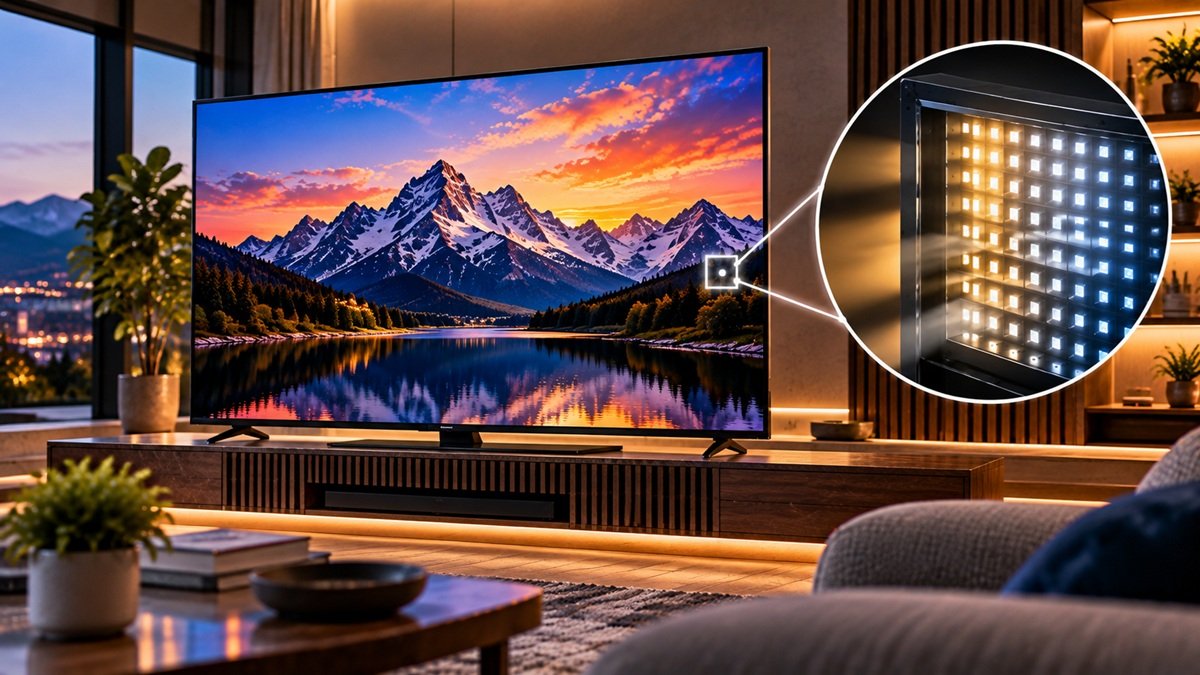
According to RTINGS’ Mini LED explainer, the backlight of a traditional LED TV typically holds somewhere between a few dozen and a few hundred LEDs. Most Mini LED TVs pack in many thousands of much smaller ones.
Because the LEDs are smaller, the TV can split its backlight into many separate zones and adjust them separately, a technique called local dimming. RTINGS says this helps dark scenes by lowering, or even cutting off, the light behind darker areas. In a bright scene with a few dark patches, the TV can keep most of the picture bright and dim only behind those patches.
What “Mini LED” Actually Means
RTINGS’ page, updated Dec 08, 2025, is blunt: technically speaking, it says, “Mini LED” doesn’t mean anything. The page calls it a marketing term that TCL introduced in 2019.
People generally take the name to mean smaller, more numerous LEDs in the backlight, the page says, but nothing regulates or defines what can carry it. Some brands use an unofficial size of roughly 100 to 200 micrometers per LED. RTINGS notes that this isn’t universal and that some brands ignore it.
Because of that gap, the page says, the market has turned into a “wild-west situation,” with some brands using the Mini LED label on TVs that rely on dated, simplistic backlight technology.
How Does Mini LED Compare With a Regular LED TV?
On contrast, the page is emphatic that Mini LED TVs clearly beat more traditional LED models. Among the Mini LED TVs RTINGS had tested by then, more dimming zones typically meant better maximum contrast.
RTINGS calls that trend a bit misleading. LEDs that are off give off no light, so it says the real driver is how precisely the TV dims its zones. For what contrast measures on its own, see our explainer on what contrast is on a TV.
The page’s conclusion is that, next to traditional LED TVs, Mini LED sets show deeper, more even blacks and perform better in a dark room. They haven’t caught up to OLEDs, RTINGS says, but they’re getting better. For a closer look at that matchup, see our comparison of OLED vs Mini LED TVs.
Zone Count vs. Algorithms
RTINGS says its dimming zone precision test measures how well a TV dims the LEDs around a bright part of the scene, which it describes as the core of what Mini LED is for. With subtitles or oddly shaped bright areas on screen, more zones let the TV dim closer to the bright parts and cut down the glow around them. RTINGS says that glow is usually called haloing.
When a bright area is smaller than a single zone, the page explains, the TV has to leave that whole zone lit, which lifts black levels in areas that should be dark.
More zones aren’t the whole answer, though. RTINGS says zone count and precision correlate very clearly but not perfectly, and that without good algorithms controlling the zones, local dimming can still look bad even with 10,000 of them. Its summary is that more zones help, but the algorithms matter equally, if not more. For how the zones themselves work, see our explainer on what local dimming is.
In RTINGS’ black level score, which combines its contrast, zone precision and zone transition scores, more zones do seem to go with better black levels, but the fit is far from perfect and there are many outliers. Zone count matters, it concludes, yet the algorithms and the native panel still shape the dark-room experience significantly.
Are Mini LED TVs Good?
Per RTINGS’ page (updated Dec 08, 2025), they do deliver on their promise of deeper blacks and better dark-room performance than traditional LED models. The page also warns that the marketing can be very misleading, and that actual performance matters more than zone counts or vague claims.
Frequently Asked Questions
What is a Mini LED TV?
According to RTINGS, most Mini LED TVs use many thousands of much smaller backlight LEDs than a traditional LED TV, which lets the TV dim the backlight in many separate zones.
Is Mini LED an official technology standard?
No. RTINGS calls it a marketing term that TCL introduced in 2019, with no formal controls or definition behind it.
Do more dimming zones always mean a better picture?
Not always. RTINGS says more zones help and tend to go with better contrast and black levels, but the algorithms controlling the zones are equally important, if not more so.

Nridi
Editor, SignalVetted
This article does not report independent product testing.
✅ Based on RTINGS’ Mini LED explainer (page shows “Updated Dec 08, 2025”).