
Best OLED TVs (2026): The Complete Buying Guide
Last updated: September 2026
🕒 15 min read
Disclosure: As an affiliate partner, we may earn a commission from qualifying purchases made through the links in this article, at no extra cost to you.
“Best OLED TV” isn’t really one question — it’s three. Which brand fits how you already watch and game. Which tier of that brand’s lineup is actually worth paying for. And what size makes sense in your room. Skip any one of those and you’ll end up comparing TVs that were never really competing with each other in the first place. This guide walks through all three decisions in order, then gets specific: four real picks across LG’s and Samsung’s current OLED lineups, what each one actually trades off against the others, and where to go next depending on which axis — brand, tier, size, or use case — matters most to you.
If you’re not yet sure OLED is the right panel technology at all, the “What Is OLED TV?” section below covers that first; if you’ve already decided on OLED and just want the shortlist, skip ahead to “How to Choose” or straight to the Top Picks table further down.
Table of Contents
What Is OLED TV?
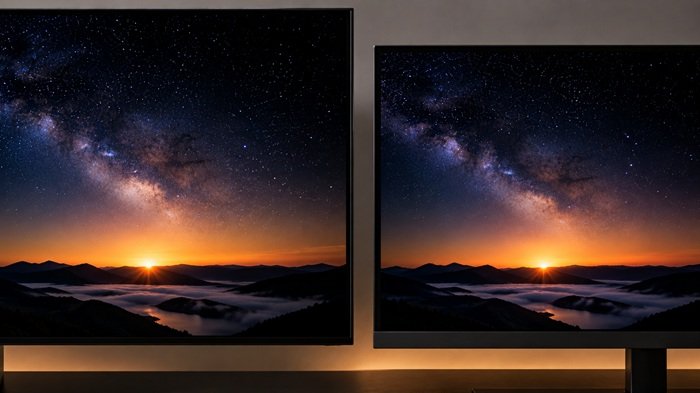
OLED stands for organic light-emitting diode. Unlike an LED or QLED TV, which shines a backlight through a layer of liquid crystal, an OLED panel’s individual pixels produce their own light and can switch off completely — down to true black, pixel by pixel, with no backlight bleed around bright objects on a dark background. That’s the reason OLED TVs are consistently praised for contrast and black level, and it’s the single most useful thing to understand before comparing models: every OLED TV, regardless of brand or price, starts from that same fundamental picture-quality advantage over LED/QLED alternatives.
For a deeper technical walkthrough of how the panel itself works, RTINGS.com’s panel-type explainer covers the underlying display science in more depth than a buying guide needs to.
What differs between brands and models isn’t the core OLED advantage — it’s everything built around it: processor generation, peak brightness, refresh rate ceiling, anti-glare treatment, and smart-platform software. LG’s OLED TVs use WOLED (white OLED with a color filter layer); Samsung’s OLED TVs, despite originally launching on a different panel type, have shipped on the same WOLED panel family in some recent generations too — a point worth flagging honestly rather than assuming brand implies panel type (see the panel-brand note under the Samsung picks below).
Samsung’s own OLED buying-guide page covers its side of that positioning directly, alongside its Glare Free anti-reflective coating, which is a real, distinct feature from the base OLED panel technology itself — not every Samsung OLED includes it, and it’s a bright-room feature rather than a picture-quality upgrade in a dark room.
One trade-off worth naming up front, honestly: OLED’s individual pixels degrade with use, which is why long-term image retention (“burn-in”) comes up in OLED discussions more than it does for LED/QLED. In practice this shows up mainly with static on-screen elements left in one place for extended periods (a news channel’s logo, for instance) rather than normal, varied viewing — but it’s a real characteristic of the technology, not a rumor, and worth knowing before you buy rather than after.
Every current-generation OLED TV, across both brands covered in this guide, ships with built-in mitigation features (automatic pixel-refresh cycles, screen-saver/logo-dimming behavior) that reduce the practical risk for typical, varied viewing — they don’t eliminate the characteristic, but they’re why burn-in is a much smaller concern for a normal household than it was on earlier-generation OLED panels.
HDR format support is another area where it’s easy to assume all OLED TVs are identical when they aren’t. Dolby Vision — a dynamic, scene-by-scene HDR format — is supported on some models and not others within the same brand’s lineup, and it’s worth checking for specifically if you watch a lot of Dolby Vision-mastered streaming content rather than assuming every OLED TV in a given price range includes it. HDR10 and HDR10+ support is more consistent across current OLED lineups, but Dolby Vision specifically is a spec worth confirming per model, not per brand.
How to Choose an OLED TV
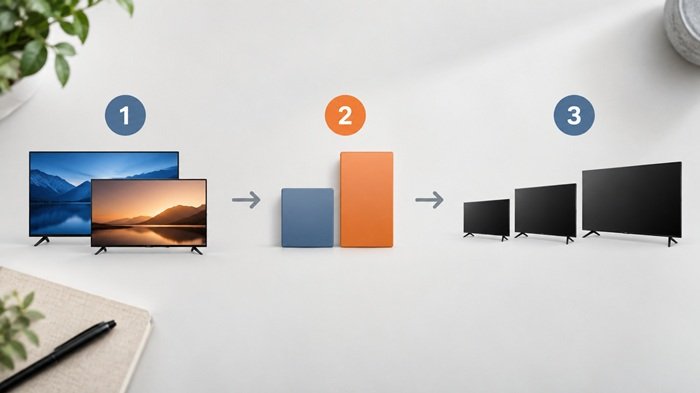
Once you’ve decided OLED’s contrast and black-level advantage is worth it for you, three separate questions decide which specific model actually fits:
Brand: LG or Samsung? Both brands’ current OLED lineups deliver the same fundamental panel advantage. What actually differs is software and ecosystem — LG runs webOS across its whole OLED range; Samsung runs Tizen with SmartThings integration, and reserves its Glare Free coating for select models. If you already own other devices from one ecosystem — a soundbar, a phone with matching casting features, other smart-home gear — that’s a legitimate reason to lean that direction before comparing spec sheets line by line. Neither brand has a categorical picture-quality edge over the other at the same tier and price point.
Tier: mid-flagship or budget? Within either brand, the newer, higher-tier model buys you a newer processor generation and a higher refresh-rate ceiling — both of which matter most for gaming (faster upscaling, higher frame rates with VRR/ALLM) and matter far less for everyday movie and TV viewing. A gaming-focused buyer pairing this with a current-generation console or a high-refresh PC should lean toward the higher tier; a buyer who mostly watches rather than games can save real money on the entry tier without giving up OLED’s core contrast advantage.
Size and use case. Size is mostly a room-and-budget decision independent of picture quality — but use case can tip the brand/tier decision too. A bright-room viewing space makes Samsung’s Glare Free coating (where available) more relevant than it would be in a fully dark home-theater room. A movie-focused buyer prioritizing HDR format support might weigh Dolby Vision availability more heavily than raw refresh-rate ceiling, where a gaming-focused buyer would weigh it the other way.
Put together: decide brand by ecosystem fit, decide tier by whether you’ll actually notice the processor/refresh-rate gap (mostly a gaming question), and decide size by your room and budget last, since it doesn’t meaningfully interact with the other two.
It’s worth being explicit about why brand and tier don’t need to be decided together, either: LG’s own gap between its two tiers (processor generation, refresh ceiling) is structurally the same gap as Samsung’s between its two tiers — so once you’ve picked a brand for ecosystem reasons, the tier decision inside that brand works the same way regardless of which brand you picked. That’s why this guide can give one tier framework that applies to both brands, rather than two separate ones.
Where the two brands actually diverge is in the extras layered on top of the base tier structure — Samsung’s Glare Free coating on select models, LG’s Tandem RGB panel reserved for its largest sizes — and those are worth checking per model rather than assumed from the brand name alone.
Explore OLED TVs by Category
If you already know which axis matters most to you, these more specific guides go deeper than this page can on their own. Right now, three of these exist on the site — a 65-inch size-focused guide, a movie-focused use-case guide, and a budget-focused guide — with more planned across size, use-case, and brand as the cluster fills in:
- Best 65-Inch OLED TVs — the size-focused breakdown, for readers who’ve already settled on 65 inches and want the brand/tier decision made specifically at that size.
- Best OLED TVs for Movies — the use-case-focused guide, weighing HDR format support and bright-room viewing conditions specifically for movie night.
- Best Budget OLED TVs — the budget-focused guide, for readers whose primary constraint is price rather than brand or tier preference.
(These three guides are in production and not yet live — links will be added here once each one is published. Additional guides covering other sizes, use cases, and brand-specific comparisons are planned but not yet drafted.)
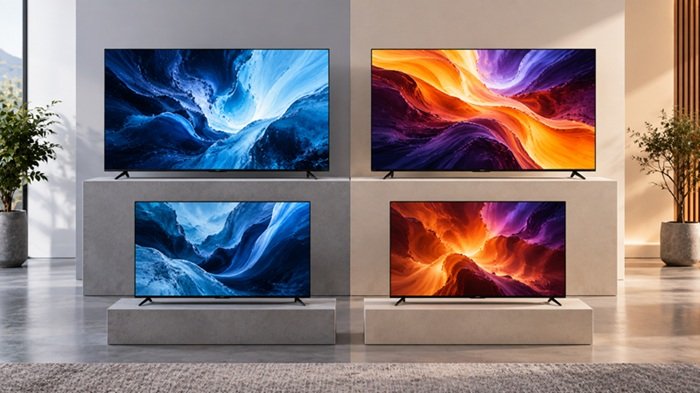
Top OLED TV Picks at a Glance
| Category | Pick | Best For |
|---|---|---|
| Best Overall | LG OLED65C6 | Buyers who want LG’s newest processor and highest refresh ceiling |
| Best Overall Alternative | Samsung 65S90H | Buyers who want the mid-flagship tier but prefer Samsung’s ecosystem or Glare Free coating |
| Best Budget | LG OLED65B6GUA | Buyers who want LG’s picture quality without the higher-tier processor/refresh |
| Best Budget Alternative | Samsung 65S85H | Buyers who want Samsung’s cheapest OLED and don’t need the newer processor |
Best Overall: LG OLED65C6
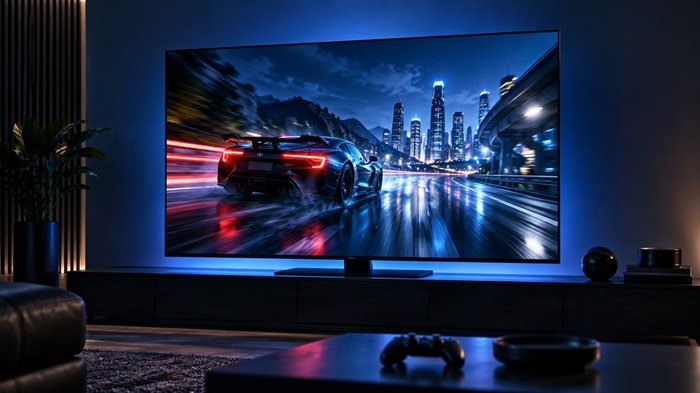
The LG OLED65C6 is the pick for a buyer who wants LG’s newest processor and the highest refresh ceiling available in this lineup. Based on the product’s own specification data, it pairs the Alpha 11 Gen3 processor with a 165Hz refresh ceiling, Dolby Vision support, and AI-driven upscaling on top of LG’s standard WOLED evo panel.
One spec worth knowing before you buy: the 65-inch C6 uses LG’s standard WOLED evo panel, not the Tandem RGB panel LG builds only into its 77- and 83-inch C6H sizes — so don’t expect that larger size class’s brightness ceiling from this model. VRR and ALLM support alongside the 165Hz refresh rate make it a strong console/PC gaming pick; off-axis viewing angle is the one place any WOLED panel trails a wide-viewing-angle LCD design, though that’s a category-wide OLED characteristic, not specific to this model.
🛒 Check LG OLED65C6 (paid link)
Best Overall Alternative: Samsung 65S90H
The Samsung 65S90H is the Samsung-side match for the C6 — its own Gen3 processor (NQ4 AI Gen3) and a matching 165Hz refresh ceiling, plus the Glare Free anti-reflective coating that isn’t standard across Samsung’s whole OLED lineup. It’s the pick for someone who wants mid-flagship specs but is already leaning Samsung for ecosystem or bright-room viewing reasons.
⚠️ One thing worth flagging honestly: per this batch’s own product data, cross-checked across two source files, this model’s panel corrects to LG-Display WOLED from an original QD-OLED/Samsung-Display listing — a correction that isn’t yet independently certified. Treat that specific detail as accurate-but-pending rather than fully settled. Beyond that flag, its Glare Free coating is a genuine bright-room advantage — more relevant to reflection control than to raw brightness — and VRR/ALLM support matches the C6’s gaming feature set at the same 165Hz ceiling.
🛒 Check Samsung 65S90H (paid link)
Best Budget: LG OLED65B6GUA
Step down from the C6 to the B6GUA and the picture quality itself doesn’t change — same core WOLED panel — but the processor and refresh ceiling do: Alpha 8 instead of Alpha 11 Gen3, capped at 120Hz instead of 165Hz. If competitive gaming isn’t the point of this TV, that’s a trade most buyers won’t notice day to day.
Where it does matter is gaming specifically: a 120Hz ceiling is a real limit for hardware that can push faster frame rates, and no amount of spending on this exact model changes that. VRR and ALLM are still both supported, though, so tear-free console gaming isn’t lost — only the higher frame-rate headroom the C6 offers.
🛒 Check LG OLED65B6GUA (paid link)
Best Budget Alternative: Samsung 65S85H
The Samsung 65S85H is Samsung’s cheapest OLED in this lineup — the budget counterpart to the S90H, running an older NQ4 AI Gen2 processor and a 120Hz ceiling, the same shape of trade-off as LG’s budget pick above.
⚠️ The same panel-brand correction flag applies here as the S90H above — treat the panel-brand detail as pending, not settled, until independently confirmed. Beyond that, the processor and refresh-rate gap versus the S90H is the real trade for the lower price; VRR and ALLM remain supported at the 120Hz ceiling, so core gaming features aren’t missing, only the S90H’s higher refresh headroom.
🛒 Check Samsung 65S85H (paid link)
Who Should Buy What
If you game on a current-generation console or a high-refresh PC, the mid-flagship tier is worth it in either brand — LG OLED65C6 or Samsung 65S90H — since processor generation and refresh ceiling are the one gap in this lineup you’ll actually notice in daily use, not just on a spec sheet.
If movies and everyday TV are most of what you watch, either brand’s entry tier — LG OLED65B6GUA or Samsung 65S85H — gets you the same core OLED contrast and black-level performance at a real discount, since the processor gap that matters for gaming barely registers outside of it.
Bright-room viewers — a living room with windows facing the screen, or a TV that doubles as a daytime family room set — should weigh Samsung’s Glare Free coating on the S90H more heavily than the processor/refresh-rate spec alone would suggest, since reflection control is a practical, everyday advantage in that specific setup that neither LG pick offers at this tier.
Buyers without a strong brand preference either way can treat price and availability as the tiebreaker once tier is decided — within a tier, the gap between an LG and a Samsung pick is close enough in practice that neither consistently outperforms the other, so whichever is priced better or in stock at the time of purchase is a reasonable, low-risk way to decide.
Featured OLED TV Reviews & Comparisons
For readers who want more depth than a buying guide’s per-pick summary, these six pieces cover the same four products and the broader OLED-vs-ownership questions in more detail. Like the category guides above, these are in production and not yet live on the site — named here so you know what’s coming, without linking to a page that doesn’t yet resolve:
- LG OLED65C6 Review — the full single-product review behind the Best Overall pick above.
- Samsung 65S90H Review — the full single-product review behind the Best Overall Alternative pick.
- LG OLED65B6GUA vs. LG OLED65C6 — the direct within-brand tier comparison behind this guide’s LG tier framing.
- Samsung 65S85H vs. Samsung 65S90H — the equivalent within-brand tier comparison for Samsung.
- Is OLED Worth It in 2026? — the foundational investigation for readers still deciding on the technology itself, before brand or tier.
- What Is OLED TV Technology? — a deeper explainer companion to the “What Is OLED TV?” section above.
OLED TV vs. QLED TV
If you’re not yet sure OLED is the right technology for you at all, the other major panel technology worth knowing about is QLED — a quantum-dot-enhanced LED/LCD TV that uses a backlight rather than self-emitting pixels. QLED TVs generally reach higher peak brightness than OLED, which can be an advantage in very bright rooms, but they don’t match OLED’s per-pixel black level and contrast, since a backlit panel can’t fully eliminate light bleed around bright objects on a dark background the way a self-emitting OLED pixel can.
Which technology is “better” really depends on your room’s lighting and what you watch most — a dedicated, mostly-dark home theater setup tends to favor OLED’s contrast advantage, while a consistently bright living room may get more practical benefit from QLED’s higher brightness ceiling.
Price is also part of this comparison in practice, even though this guide doesn’t cite specific prices: QLED TVs are generally available across a wider range of sizes and price points than OLED, since the backlit LED/LCD manufacturing process scales differently than OLED’s. That’s a real factor for a buyer prioritizing a very large screen on a limited budget, separate from the contrast-vs-brightness trade-off described above.
(A dedicated QLED TV buying guide, covering Samsung, TCL, and Hisense’s QLED lineups specifically, is planned for this site but not yet authorized or published — no link is included here for that reason, and none will be added until that page exists and its own authorization is complete.)
Frequently Asked Questions
What is the best OLED TV overall?
Among the models covered in this guide, the LG OLED65C6 and Samsung 65S90H represent the mid-flagship tier from each brand — the newest processor and highest refresh ceiling each brand currently offers at this size. Which one is “best” for you comes down to brand/ecosystem preference more than a clear performance gap between them.
Is LG or Samsung better for OLED TVs?
Neither brand has a categorical picture-quality edge at the same tier and price point. The practical differences — refresh ceiling, processor generation, Samsung’s Glare Free coating on select models, webOS vs. Tizen/SmartThings — come down to which specific features and ecosystem fit your setup, not one brand outperforming the other broadly.
Do I need the mid-flagship tier, or is a budget OLED TV enough?
If you game on a current-generation console or a high-refresh PC, the mid-flagship tier’s newer processor and higher refresh ceiling are worth the price difference. If you mostly watch movies and shows, a budget-tier OLED delivers the same core contrast and black-level advantage for less, and the processor gap is far less noticeable outside of gaming.
Should I get an OLED TV or a QLED TV?
OLED generally wins on contrast and black level, especially in darker rooms; QLED generally wins on peak brightness, which can matter more in a consistently bright room. Neither is universally “better” — it depends on your room’s lighting and what you watch most.
Is OLED burn-in still something to worry about in 2026?
It’s a real characteristic of the technology, not a myth, but current-generation OLED TVs from both brands covered here ship with automatic mitigation features (pixel-refresh cycles, logo-dimming) that meaningfully reduce the practical risk for normal, varied viewing. It’s a bigger concern for a static, always-on use case (a 24/7 news or stock ticker display, for instance) than for typical household movie, show, and gaming use.

Nridi
Editor, SignalVetted
Nridi researches every pick before publishing.
✅ Based on spec analysis and each pick’s official/retailer listing data — last verified September 2026.