
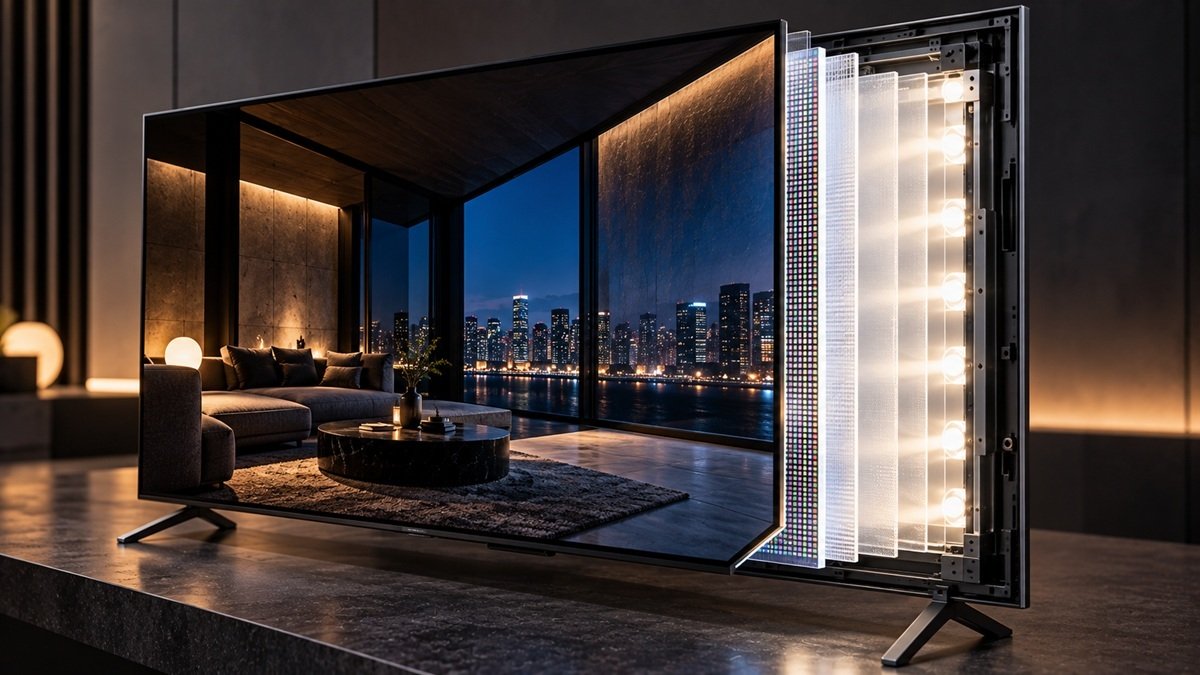
What Is an LED LCD TV? How LED TVs Work
Last updated: September 2026
🕒 5 min read
Disclosure: This article does not contain affiliate or sponsored links. SignalVetted may still reference specific products or brands for informational purposes only.
LED or LCD? The two labels look like they name different kinds of TV, but they don’t. If you’re wondering what is an LED LCD TV, RTINGS’ explainer on LED TVs gives a plain answer: an LED TV is an LCD TV that uses LEDs as a backlight. This guide walks through what that means, how the layers of the screen work, and what RTINGS says these TVs do well and less well. We haven’t tested any TVs for this article; everything below comes from RTINGS.
Table of Contents
What Is an LED LCD TV?
RTINGS puts it simply: an LED TV is an LCD TV that uses LEDs as a backlight. LCD stands for liquid crystal display, and it refers to how this type of TV controls the flow of light.
Because modern LED TVs still rely on LCD panels to actually display an image, RTINGS notes that the terms LED and LCD are often used interchangeably.
From CCFL to LED: Why the Backlight Changed
LCD TVs have been around a long time, but RTINGS says the first ones used cold-cathode fluorescent lamps (CCFL) as a light source. Those lamps had a lot of downsides: they were bulky, they had a relatively limited life span, and they used mercury, which posed health risks if they broke.
Manufacturers started switching to LED backlights in the mid-2000s, and RTINGS says these grew in popularity very quickly. LEDs are thin, they last longer than CCFLs, and they’re significantly more energy-efficient.
LED TVs have now been out for over 20 years. Per RTINGS, they’ve gotten smaller, brighter and more energy-efficient, but the underlying technology is basically the same.
How an LED LCD TV Makes a Picture
The layers
RTINGS describes blue LEDs arranged in a grid as one of the first stacks in the overall TV structure. The light from the LEDs passes through various layers, including the LCD layer. RTINGS says that layer acts similarly to the iris of a camera, controlling the flow of light from the backlight through the colored layers that make up the subpixels.
The panel types
There are different types of LCD panels, including IPS, ADS and VA. RTINGS calls these the subtypes of an LED TV. It also points out that LED/LCD displays come in many shapes and sizes, from tiny displays on home appliances and electronics up to the largest TVs on the market.
How LED LCD TVs Perform, per RTINGS
RTINGS looks at four key performance indicators for LED/LCD TVs: contrast, brightness, color volume and motion blur. Its findings draw on the 55 LED/LCD TVs it has tested with its 2.0.1 or 2.1 test methodologies, and it reports the results across those TVs.
Contrast
RTINGS measures contrast in two ways: native contrast, which is the panel’s own contrast with local dimming turned off, and contrast with local dimming on. On native contrast, VA panels tend to deliver the best results, while IPS or ADS panels are far worse. With good local dimming, the exact panel type isn’t as important, and local dimming helps bridge the gap.
If you want to know what local dimming does, our explainer on what local dimming is covers it.
Brightness
Brightness is one of the core strengths RTINGS names for LED TVs. It says even mid-range models in 2025 tend to have very good peak brightness, high-end models are exceptionally bright, and some are bright enough to be used outdoors in direct sunlight. LED TVs also handle large, bright scenes well, with less of a drop-off in brightness as more of the screen is bright.
Color
LED panels tend to have pretty good color volume, thanks to a combination of high peak brightness and extra layers in the TV’s internal structure that improve color saturation. Many LED TVs use KSF phosphors or quantum dot colors to widen the range of colors they can produce.
Motion blur
Response time is one weak point RTINGS highlights. Most LED TVs have very high CAD (cumulative absolute deviation) values, which means the panel is slow to change from one shade to another, so you’ll see more blur in fast action. RTINGS says that extra blur is beneficial for movies but not for gaming or sports. The subtype of panel doesn’t really matter here; RTINGS says there are good and bad models.
Common Misconceptions or Mistakes
LED and LCD are not two different types of TV: an LED TV is an LCD TV with an LED backlight, and RTINGS says the terms are often used interchangeably.
Panel type also doesn’t settle everything. Per RTINGS, the subtype matters for native contrast, where VA tends to lead, but much less once good local dimming is in play, and it doesn’t matter for motion blur, where both good and bad models exist.
The Bottom Line
RTINGS calls LED and LCD TVs by far the most popular type of TV on the market. They deliver good picture quality overall and come in a wide range of sizes and price points. RTINGS also says new and upcoming technologies such as Micro LED and RGB Mini LED continue to push LED and LCD technology to new limits.
For how LED compares with OLED, see our OLED vs LED TVs comparison.
Frequently Asked Questions
Is an LED TV the same as an LCD TV?
Per RTINGS, an LED TV is an LCD TV that uses LEDs as a backlight. It says the terms are often used interchangeably because modern LED TVs still use LCD panels to display the image.
Why did TVs switch from CCFL to LED backlights?
RTINGS says CCFL lamps were bulky, had a limited life span and used mercury. LEDs are thin, last longer than CCFLs and are significantly more energy-efficient.
What panel types do LED TVs use?
RTINGS names IPS, ADS and VA as the different types of LCD panels, and calls them the subtypes of an LED TV.
Is motion blur a problem on LED TVs?
Response time is one weak point RTINGS names for LED TVs: most have very high CAD values, and it says the extra blur isn’t good for gaming or sports. It also says this varies by model.

Nridi
Editor, SignalVetted
This article does not report independent product testing.
✅ Based on RTINGS’ explainer “What Is LED?”.