Here’s How to Dispose of an Old TV the Right Way
Last updated: September 2026
🕒 5 min read
Disclosure: This article does not contain affiliate or sponsored links. SignalVetted may still reference specific products or brands for informational purposes only.
The new TV is on the wall and the old one is leaning against it, waiting. Before it goes anywhere, it’s worth knowing how to dispose of an old TV properly, because what’s right depends on where you live and what kind of TV it is. This guide follows the U.S. Environmental Protection Agency’s own guidance, so it applies to readers in the United States.
Table of Contents
How to Dispose of an Old TV: The Short Answer
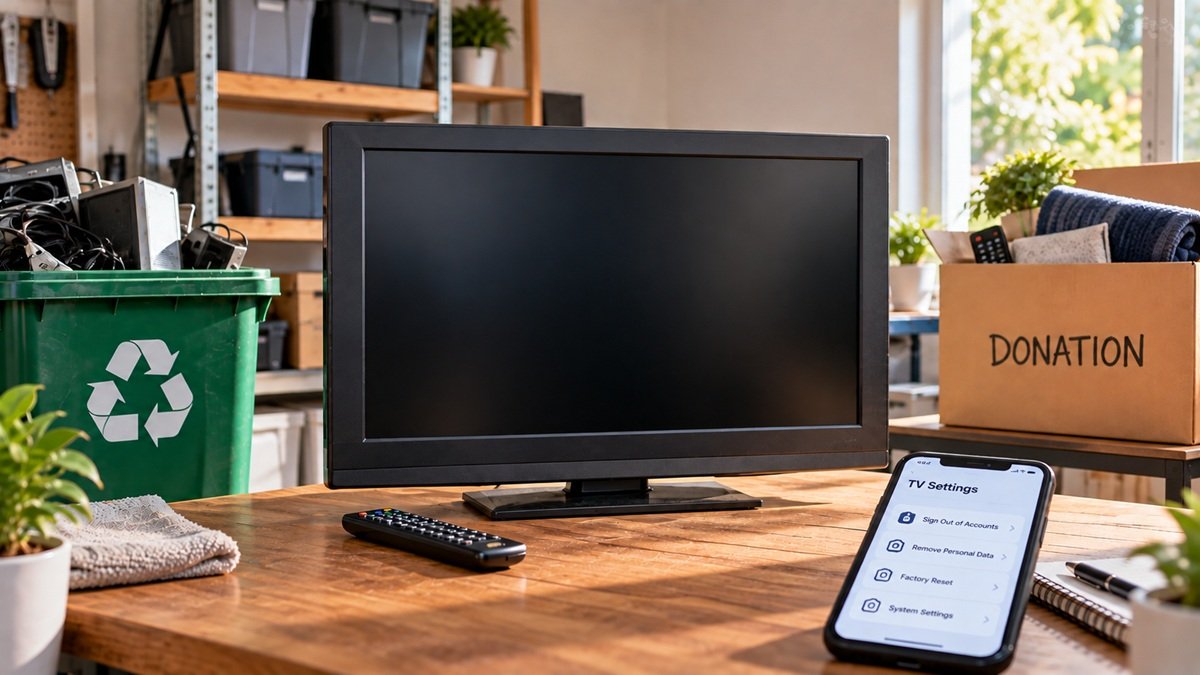
Donate or recycle it, and wipe your personal information first. (Our suggestion: donate a set that still works, recycle one that doesn’t.) EPA’s electronics donation and recycling page explains why: electronic products are made from valuable materials such as metals, plastics and glass, and “donating or recycling consumer electronics conserves our natural resources and avoids air and water pollution.”
The steps below turn that into a plan: clear your data, find a program, and check what your state requires.
Step 1: Clear Your Personal Data
EPA’s advice before you donate or recycle electronics is short: delete all personal information from them.
How you do that on a TV depends on the brand. As one example, our guide on how to reset a Samsung TV explains which Samsung reset removes what.
In our suggestion, streaming accounts belong on that list too: our guide to signing out of Netflix on a TV shows how to remove the account from the TV, including remotely from your account page.
Step 2: Donate or Recycle
Whichever you choose, EPA says you can search for options on the websites of Call2Recycle, Earth911 and Greener Gadgets.
What R2 and e-Stewards certification means
EPA’s page on certified electronics recyclers names two accredited certification standards: the Responsible Recycling (R2) standard and the e-Stewards standard. According to EPA, these standards assess recyclers’ environmental, worker-health and security practices, and, in EPA’s words, are meant to “maximize reuse and recycling, minimize exposure to human health or the environment.”
You don’t need to find a certified facility on your own. EPA notes that households with only a few devices to donate or recycle can use collection programs that work with certified recyclers.
Step 3: Check Your State’s Rules
Disposal rules aren’t the same everywhere. EPA’s page on electronics regulations says “Twenty-five U.S. states (plus the District of Columbia) currently have electronics recycling laws,” and it points readers to a state-by-state map for the details.
We don’t list the states here, because the rules differ and change. Check your own state’s environmental agency or your local waste service before you put a TV out for collection.
Old Tube (CRT) TVs Need Extra Care
Older tube TVs use a cathode ray tube, or CRT, and EPA has specific guidance on used CRTs and CRT glass. According to EPA’s guidance on used CRTs, processed CRT glass that fails the toxicity characteristic for hazardous waste “generally includes funnel glass and frit line material.” The same guidance separately warns against activities that use “temperatures high enough to volatize lead from CRTs.”
EPA’s CRT guidance also says: “Used CRTs discarded by households are considered ‘household hazardous waste’ and are exempt from hazardous waste regulations.” That exemption refers to EPA’s own (federal) rules, and the page gives households no instructions on how to dispose of a CRT. The same page adds that “state agencies may have more stringent requirements than the federal government, so it is important to also check your specific state regulations.” For a CRT TV, that makes Step 3 the step not to skip.
Before It Leaves Your House: A Checklist
- Wipe it. Delete your personal information, per EPA’s advice.
- Decide: donate or recycle. Our suggestion is to donate a working set and recycle one that isn’t.
- Find a program. Start with the organizations EPA lists, and look for collection programs that use certified (R2 or e-Stewards) recyclers.
- Check your state. EPA says 25 states plus DC currently have electronics recycling laws.
- Treat a CRT with extra care. EPA classes a used CRT discarded by a household as household hazardous waste, and your state may have stricter rules, so check them first.
Frequently Asked Questions
Can I put an old TV in the trash?
The EPA pages this guide is based on don’t give a yes-or-no answer, and we won’t either. EPA’s guidance points you toward donating or recycling, EPA says 25 states plus DC currently have electronics recycling laws, and it classes a used CRT discarded by a household as household hazardous waste. Check your state environmental agency or local waste service for what applies where you live.
What does a certified electronics recycler mean?
EPA recognizes two accredited standards, R2 and e-Stewards, which assess a recycler’s environmental, worker-health and security practices. EPA says households with smaller amounts of electronics can find collection programs that use these certified recyclers.
Where should I start if I want to dispose of an old TV today?
Wipe your data, then search the organizations EPA lists (Call2Recycle, Earth911 and Greener Gadgets) for a donation or recycling option near you.

Nridi
Editor, SignalVetted
This article does not report independent product testing.
✅ Based on the U.S. EPA’s electronics donation, certified recycler, electronics regulation and CRT guidance pages.