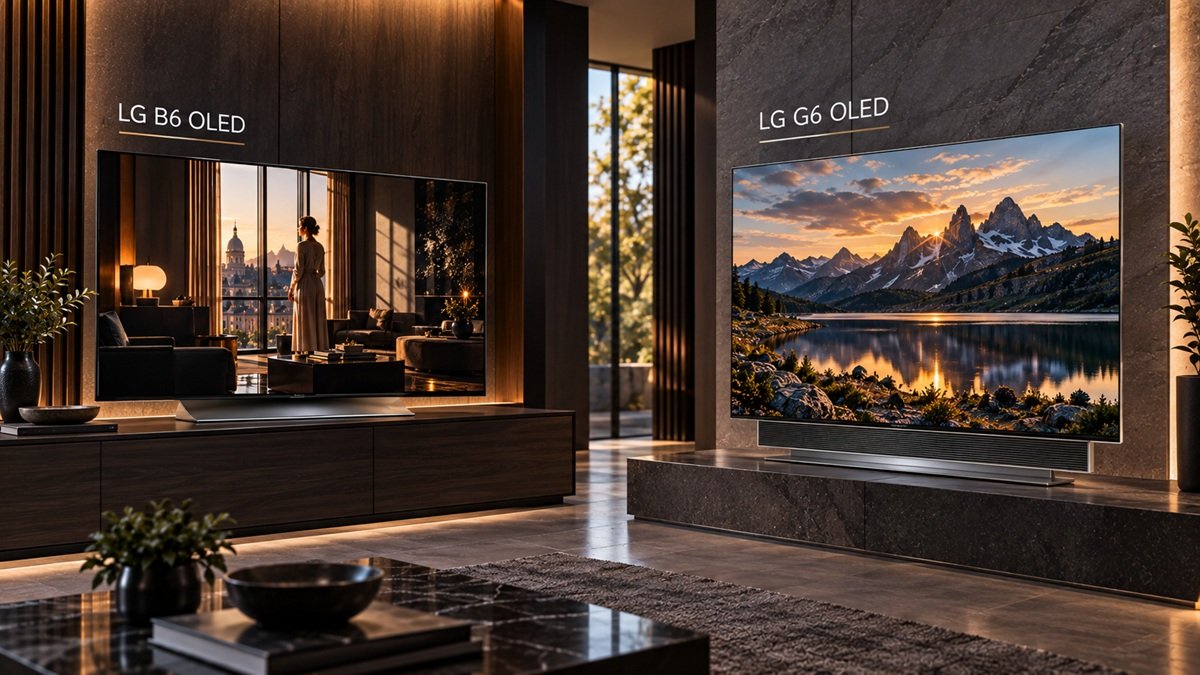
LG B6 vs G6 OLED: Which Differences Really Matter When Choosing an OLED?
Last updated: September 2026
🕒 7 min read
Disclosure: This article does not contain affiliate or sponsored links. SignalVetted may still reference specific products or brands for informational purposes only.
The LG B6 and the LG G6 are two specific OLED models that differ in several clearly documented ways, and it’s easy to assume the gap between them is mostly about picture quality. Here’s the honest limitation up front, before anything else: RTINGS has tested both TVs and put them head-to-head on their own direct comparison page, but the actual comparative results for brightness, contrast, color accuracy, and motion handling are locked behind RTINGS’ membership program.
We don’t have access to those numbers for this specific pairing, and we’re not going to fill that gap with a guess, a “generally OLEDs at this tier perform similarly” hand-wave, or either model’s general reputation.
What we can tell you, confirmed directly from RTINGS’ own comparison tool: the OLED65B6GUA (the specific LG B6 model SignalVetted has reviewed) and the LG G6 OLED differ in native refresh rate, maximum screen size, and official LG branding. That’s a real, sourced answer to “what’s actually different” between these two exact TVs — just not a picture-quality verdict, because that data isn’t available to us for this pairing right now.
Table of Contents
Scope: What This Comparison Covers
This article compares two specific, tested products: the LG OLED65B6GUA (RTINGS tests this model as “LG B6 OLED 2026,” and SignalVetted has its own full review of the LG OLED65B6GUA) and the LG G6 OLED (RTINGS’ own review covers sizes 55″ through 97″). It does not cover every size or every model-year LG has sold under the “B Series” or “G Series” names — those labels span multiple generations of LG TVs, going back years, and RTINGS’ comparison data used here is specific to the 2026 B6 and G6 models RTINGS actually tested. If you’re looking at an older B-series or G-series TV, or a size RTINGS didn’t separately test, the specifics below may not carry over.
LG B6 vs G6 OLED: The Confirmed Differences
Per RTINGS’ direct comparison page, both models tested using the same Methodology v2.2.1, with both pages updated within five minutes of each other on September 18, 2026 — a clean, matched snapshot rather than two reviews from different points in RTINGS’ testing cycle:
Native refresh rate: the G6 tops out at 165Hz; the B6 tops out at 120Hz. This is the single clearest, most concrete difference RTINGS’ spec sheet shows between the two, and it’s the one most likely to matter for a specific use case rather than as a general quality signal — a higher refresh rate ceiling is primarily relevant if you’re connecting a PC or a console capable of pushing frame rates above 120fps.
Panel technology: identical. Both are classified as WOLED-type OLED panels by RTINGS, so this comparison does not show a difference in panel subtype between the two models.
Screen finish and HDR support: both are glossy-finish panels, and both support Dolby Vision. Neither of these fields shows any difference between the two models.
Size availability: the B6 comes in 48″, 55″, 65″, 77″, and 83″. The G6 comes in 55″, 65″, 77″, 83″, and 97″ — the G6 is the only one of the two available at 97″, and the B6 is the only one available at 48″. If your room calls for either of those two extremes, that alone may settle the choice before picture quality even enters the conversation.
Signature Branding and Design
One difference that is directly sourced, not inferred: LG’s own official product page brands the G6 line as LG SIGNATURE — that’s LG’s own designation, not RTINGS’ and not SignalVetted’s tier judgment. The B6 does not carry that designation anywhere on LG’s site. Beyond that branding fact, we haven’t sourced a price for either model this round, so this article doesn’t state one, and it doesn’t describe the B6 as a “budget” or “entry” tier — LG doesn’t appear to use that language for it in any official source we checked, and we’re not going to invent a label LG hasn’t applied just because the G6 carries a premium name and the B6 doesn’t.
What We Can’t Tell You: Picture Quality
RTINGS tested both the B6 and the G6, and their comparison page exists specifically to put the two head-to-head. But for this pairing, at the time we checked, every comparative result — brightness in both HDR and SDR, contrast, native and lighting-zone black-level detail, color accuracy before and after calibration, motion handling, input lag, and gaming responsiveness — is locked behind RTINGS’ membership program. Those fields showed as locked values or membership-only samples, not as visible numbers we could cite.
We’re not going to estimate those numbers from each model’s general reputation, and we’re not going to imply that a higher refresh rate or the Signature branding translates to better picture quality — refresh rate affects motion smoothness and gaming responsiveness, which is a separate dimension from the brightness, contrast, and color-accuracy tests RTINGS runs independently.
A model can lead on refresh rate without RTINGS’ own picture-quality tests necessarily favoring it, and we have no data either way for this specific pairing. If you need a first-hand, tested picture-quality comparison between these two exact models, that currently requires an RTINGS membership; we’ll revisit this page if that changes.
Where This Comparison Stops
This article answers “what’s the confirmed difference between the B6 and the G6” using RTINGS’ available spec data and LG’s own branding — not “which one looks better,” which RTINGS’ own test results for this pairing don’t currently let us answer without a membership. It also doesn’t cover every size in either lineup individually; RTINGS’ spec fields here apply across the tested variants as a product line, but picture-quality testing itself can vary by panel size in ways this comparison page doesn’t break out.
And it doesn’t make a price comparison, since neither model’s price was sourced for this piece — pricing changes often enough that we’d rather leave it out than risk stating a number that’s already gone stale by the time you’re reading this.
So, in plain terms: if the 165Hz refresh rate, the 97″ size option, or the Signature branding matter to you, the G6 is built around those specific things. If none of that matters and the smaller B6 sizes or the 120Hz ceiling are enough for how you’ll actually use the TV, the B6 covers the same core OLED panel technology at the same Dolby Vision and screen-finish spec. That’s SignalVetted’s own reasoning, built from the confirmed facts above — not an RTINGS picture-quality recommendation, and not a claim that one of these two TVs is simply “better” than the other.
Frequently Asked Questions
Do the LG B6 and G6 use the same OLED panel technology?
Yes. RTINGS’ spec comparison lists both as WOLED-type OLED panels, with identical Dolby Vision support and screen finish — there’s no panel-technology difference between them based on what RTINGS’ spec sheet shows.
Is the G6’s 165Hz refresh rate worth choosing over the B6’s 120Hz?
That depends on what you’re using the TV for, not on which one RTINGS rates higher for picture quality — we don’t have that data for this pairing. A 165Hz ceiling mainly benefits PC gaming and other high-refresh-rate sources; typical streaming, broadcast television, and most console gaming don’t push past 120Hz anyway. We haven’t sourced a price difference between the two, so this isn’t a value comparison — it’s a use-case one.
What sizes are the B6 and G6 actually available in?
Per RTINGS’ listed variants: the B6 comes in 48″, 55″, 65″, 77″, and 83″. The G6 comes in 55″, 65″, 77″, 83″, and 97″. If you need something under 55″ or over 83″, that narrows your choice between the two before anything else does.

Nridi
Editor, SignalVetted
SignalVetted has not independently tested these TVs.
✅ Based on RTINGS’ LG B6 vs G6 OLED comparison page and LG’s official G6 product page.