
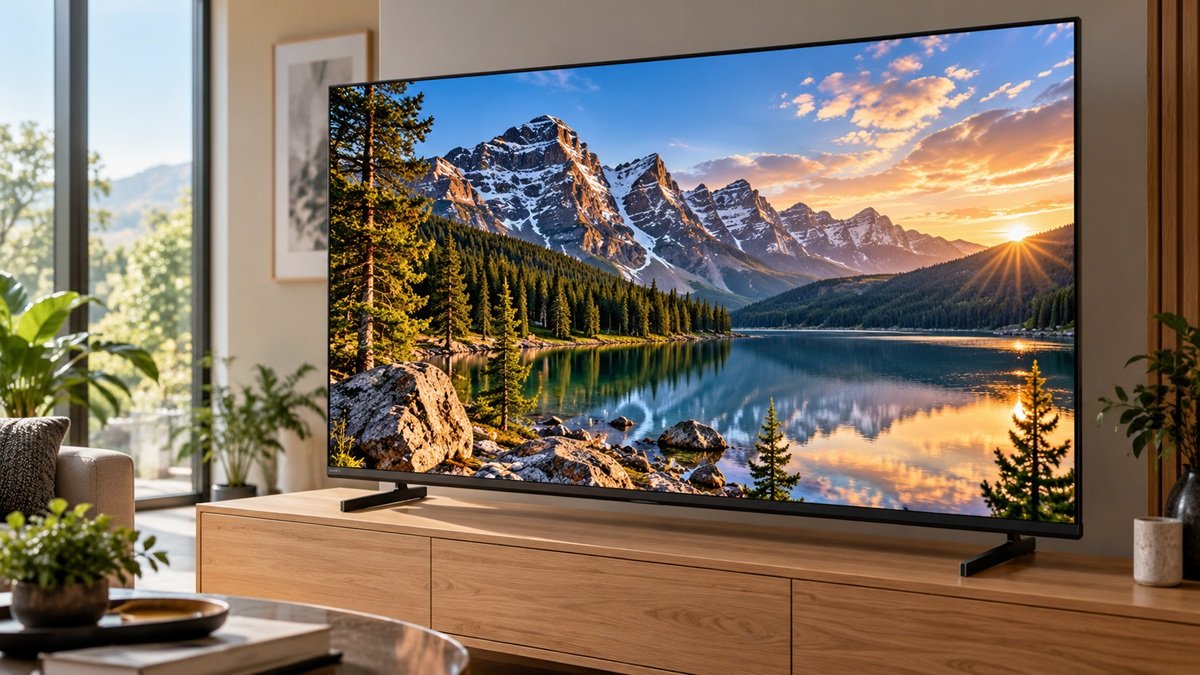
Sony K-65XR30M2 Review: What RTINGS’ Tests Say About the 65-Inch BRAVIA 3 II
Last updated: October 2026
🕒 10 min read
Disclosure: As an affiliate partner, we may earn a commission from qualifying purchases made through the links in this article, at no extra cost to you.
This Sony K-65XR30M2 review covers the 65-inch BRAVIA 3 II, the size RTINGS bought and tested. RTINGS calls the BRAVIA 3 II a mid-range 2026 TV that replaces the 2024 BRAVIA 3 and sits above the entry-level BRAVIA 2 II, with a direct-lit backlight, no local dimming and an IPS panel.
SignalVetted did not test this TV; the results below are RTINGS’, and each Inference label marks our own reading of them. Inference: the results lean toward daylight and console use, with dark-room viewing as the weak spot.
Table of Contents
Quick Verdict
At a Glance
👍 Best For: Inference: viewers who watch mostly in daylight, seat people across a wide room, and want four HDMI 2.1 inputs and 4K 120Hz console support, and who can accept the contrast and HDR results below.
👎 Skip If: Inference: you watch mostly in the dark, you want local dimming, you care about HDR highlights, or you rely on 4K over-the-air channels.
One-Line Verdict: Inference: a daylight- and console-friendly TV with a dark-room weakness, where “no local dimming” is the first fact to weigh.
🛒 Check Availability (paid link)
Product Specs at a Glance
Product Specs
Sony K-65XR30M2
65-inch 4K IPS LCD with a 120Hz native refresh rate, per RTINGS
| 📺 Panel Type | LCD, IPS sub-type |
| 🖼️ Screen Finish | Matte (65-inch) |
| 🎮 Native Refresh Rate | 120Hz |
| 💡 Backlight | Direct-lit, no local dimming, per RTINGS |
| 🔌 HDMI | HDMI 2.1 bandwidth on all four inputs |
| 🎞️ Dolby Vision | Yes, per RTINGS’ spec list |
| 🖥️ Smart Platform | Google TV version 14 |
| 📡 TV Tuner | ATSC 1.0 only |
| 🏷️ 65-inch Model Code | K-65XR30M2, as listed by RTINGS |
🛒 Check Availability (paid link)
Design & Build Quality
Materials & Finish
The notes below come from the 65-inch unit that RTINGS bought itself. RTINGS calls the design somewhat simple and says it doesn’t look as modern as other TVs in its range. The bottom bezel is fairly thick with a somewhat dated finish, and the other three sides have a noticeable dead space between the side bezel and the first pixels.
Ports & Connectivity
RTINGS reports that the BRAVIA 3 II supports HDMI 2.1 bandwidth on all four inputs. Our guide to what HDMI 2.1 is explains what that bandwidth allows.
Separately, RTINGS notes that, unlike the BRAVIA 7 II and BRAVIA 9 II, this model features a more recent chipset.
RTINGS says this model only has an ATSC 1.0 tuner, so 4K over-the-air isn’t possible. Inference: that is a limit for anyone planning to watch 4K broadcasts.
For a soundbar or home theater system, RTINGS says the TV has eARC support, which passes uncompressed high-quality audio from a connected source, and that it supports all major audio formats. Our explainer on what HDMI eARC is covers the port.
Sony K-65XR30M2 Review: Performance & Real-World Use
Local Dimming and Dark Rooms
RTINGS reports that the BRAVIA 3 II doesn’t have a local dimming feature, so there are no lighting zones. That means no blooming around bright elements against a dark background, but RTINGS says the entire image looks gray and washed out. Our explainer on what local dimming does shows what a zone-based backlight adds.
RTINGS rates the contrast as terrible, saying blacks are raised and look washed out in all content. Inference: that makes a dark room the hardest setting for this TV.
RTINGS dated its BRAVIA 3 II review August 6, 2026, and refreshed the test bench on October 20, 2026; the methodology it cites is v2.3.1, applied to the 65-inch unit. RTINGS’ BRAVIA 3 II review has the full results; some numeric values are not reproduced here.
Daytime Viewing and Reflections
RTINGS reports that the matte coating on the 65- and 75-inch models does a great job reducing the intensity of direct reflections. The other sizes have a glossy coating, so RTINGS says direct, mirror-like reflections are far more noticeable on them. This page covers the 65-inch model only. RTINGS rates total reflected light as good, but bright lights and windows directly opposite the screen are still noticeable.
HDR Performance
RTINGS rates peak brightness in HDR as mediocre. It says the TV is bright enough to deliver a fairly impactful HDR experience in moderately lit scenes, but small highlights don’t stand out at all and specular highlight details are far too dim. RTINGS adds that the TV has no brightness-enhancing features like dynamic tone mapping.
Viewing Angle
RTINGS rates the viewing angle as good. The image fades a bit as you move to the sides, but colors barely change, even at a wide angle, and RTINGS says that suits a wide seating arrangement.
Gaming and Refresh Rate
RTINGS describes excellent format support: up to a 120Hz refresh rate with either 1080p or 4K signals, though it doesn’t support a higher refresh rate for PC gamers.
On tearing, RTINGS says the TV supports variable refresh rate technology and, unlike all previous Sony TVs, also supports FreeSync. Our explainer on what VRR on a TV is covers the feature.
For consoles, RTINGS says the TV is fully compatible with everything the PS5 and PS5 Pro offer except 1440p, including 4K at 120Hz and HDMI Forum VRR, along with Auto Low Latency Mode. Xbox Series X|S support carries the same 1440p exception and lists 4K at 120Hz, HDMI Forum VRR, Dolby Vision gaming and Auto Low Latency Mode.
Input lag is fantastic, RTINGS says, as long as you’re in Game Mode. Outside it the latency is very high, so navigating menus on external players feels sluggish, and the TV has no low-latency motion interpolation mode, which RTINGS calls disappointing for retro gamers.
Key Features Breakdown
Google TV and Ads
The BRAVIA 3 II ships with Google TV version 14. RTINGS finds it fast and easy to use and says it encountered no issues or bugs during its testing. The interface contains ads, though. RTINGS says opting out of personalized ads doesn’t reduce how many you see, but opting out of Google sign-in during initial setup and using the TV as a basic TV removes ads and disables most smart features.
Flicker-Free Backlight
RTINGS places the BRAVIA 3 II among the few TVs on the market in 2026 that are completely flicker-free, because the backlight uses DC dimming alone to adjust the LEDs directly. The optional black frame insertion feature is separate: RTINGS says it only flickers at 120Hz, which causes image duplications with 60 fps content.
Built-In Sound
RTINGS rates the sound quality as sub-par. It isn’t very loud, and like most TVs there is barely any deep bass, though dialogue is clear and easy to understand at moderate listening levels. Inference: with eARC listed, a soundbar is the obvious upgrade for more volume or bass.
How RTINGS Compares the BRAVIA 3 II With Other TVs
Versus the Sony BRAVIA 5
RTINGS lists these differences. RTINGS says blacks are deeper and more uniform and bright highlights stand out better, which it says improves picture quality, especially in a dark room. The BRAVIA 3 II has better reflection handling on the 65- and 75-inch models, so dim scenes are a bit easier to see during the day.
Versus the Sony BRAVIA 3
RTINGS lists these differences from the BRAVIA 3: a matte anti-reflective coating on the 65- and 75-inch sizes, which greatly reduces glare during the day; a bit more brightness; a more advanced chipset that removes judder from more content; and HDMI 2.1 bandwidth on all four inputs instead of two.
Versus the Sony BRAVIA 2 II
Both look bad in a dark room. RTINGS lists these differences: the 3 II gets a lot brighter, has a matte coating on the 65- and 75-inch models that helps significantly reduce glare from lamps and windows facing the TV, and supports up to 4K at 120Hz on all four HDMI inputs.
Versus the TCL QM6K
RTINGS lists these differences: the TCL has far deeper, more uniform black levels and much higher contrast, brighter highlight details, less blur around fast-moving objects, and a higher maximum refresh rate for PC gamers.
The Good, the Bad, and the Ugly
The Three Pros and Two Cons RTINGS Lists
RTINGS’ summary box lists three Pros and two Cons:
- ✅ Very good image processing — a listed Pro.
- ✅ Wide viewing angle — a listed Pro.
- ✅ Great reflection handling — a listed Pro; RTINGS’ reflection notes credit the matte coating on the 65- and 75-inch models.
- ❌ Terrible black levels — a listed Con.
- ❌ Bright details are dull and flat — a listed Con.
Other Findings From RTINGS’ Test Notes
These come from RTINGS’ detailed test sections, not from its Pro and Con list:
- ✅ Console and VRR support — 4K at 120Hz, HDMI Forum VRR and FreeSync, with a 1440p exception on PS5 and Xbox.
- ✅ Fantastic input lag in Game Mode — but very high outside Game Mode.
- ✅ Completely flicker-free backlight — DC dimming alone; the optional black frame insertion flickers at 120Hz.
- ❌ No local dimming — the entire image looks gray and washed out.
- ❌ HDR highlights — small highlights don’t stand out at all.
- ❌ ATSC 1.0 tuner only — 4K over-the-air isn’t possible.
- ❌ Ads in the interface — opting out of personalized ads doesn’t change the number of ads; opting out of Google sign-in during setup (basic TV use) removes ads but disables most smart features.
- ❌ Sub-par built-in sound — not very loud, with barely any deep bass.
The Ugly
RTINGS says blacks are raised in all content and the whole image looks gray and washed out. Inference: contrast is the result most likely to decide this TV for anyone who watches films with the lights off.
Inference: a feature list this full, with four HDMI 2.1 inputs, 4K at 120Hz and Dolby Vision, can suggest more picture performance than the contrast and HDR results support.
Who Should Buy This — and Who Shouldn’t
Buy This If
Inference: the K-65XR30M2 fits a buyer who ranks daylight viewing, wide seating and console features ahead of dark-room picture quality. The facts behind that reading, as RTINGS describes them, are the matte coating on the 65-inch model, the good viewing angle, four HDMI 2.1 inputs, and 4K at 120Hz with VRR. RTINGS adds that daytime viewing works as long as the room doesn’t get too bright.
Skip This If
Inference: dark-room viewers are the group these results serve least, because RTINGS reports no local dimming, raised blacks and a gray, washed-out image. Buyers whose priority is dark-room picture quality have a reason to look at the BRAVIA 5, which RTINGS says delivers much better picture quality in a dark room. For this TV set against the 65-inch BRAVIA 7 II, see our Sony K-65XR30M2 vs Sony K-65XR70M2 comparison.
Inference: HDR-first buyers and anyone who counts on 4K over-the-air channels face their own limits here, since RTINGS says small HDR highlights don’t stand out at all and the tuner is ATSC 1.0 only.
Final Verdict
Is the Sony K-65XR30M2 Worth Buying?
This closing section is our reading of RTINGS’ published results for the 65-inch unit; it is not a SignalVetted rating or test result. The results describe a 65-inch set with no local dimming, a matte finish, four HDMI 2.1 inputs and 4K 120Hz console support. Inference: if daylight use and gaming features rank above dark-room contrast and HDR for you, the evidence in this Sony K-65XR30M2 review fits; if they don’t, the BRAVIA 5 comparison above is the one to weigh first.
🛒 Check Availability (paid link)
Frequently Asked Questions
Does the Sony K-65XR30M2 have local dimming?
No, according to RTINGS. It reports that the BRAVIA 3 II doesn’t have a local dimming feature, so there are no lighting zones and the entire image looks gray and washed out.
How does the BRAVIA 3 II compare with the BRAVIA 5?
RTINGS says blacks are deeper and more uniform and bright highlights stand out better, which it says improves picture quality, especially in a dark room. RTINGS lists better reflection handling for the 3 II on the 65- and 75-inch models.
What gaming features does the Sony K-65XR30M2 support?
RTINGS lists 4K at 120Hz, variable refresh rate, FreeSync and Auto Low Latency Mode, with a 1440p exception on PS5 and Xbox Series X|S. It calls input lag fantastic in Game Mode and very high outside it.
Who might want to avoid the Sony K-65XR30M2?
Inference: RTINGS’ results point to dark-room viewers, HDR-first buyers and anyone who needs 4K over-the-air channels as the groups with the most to weigh, based on the no-local-dimming, HDR highlight and ATSC 1.0 tuner findings.
What is the model code of the 65-inch BRAVIA 3 II, and which sizes have the matte coating?
RTINGS lists K-65XR30M2 for the 65-inch size it bought and tested. It notes that only the 65- and 75-inch models have the matte coating. This page covers the 65-inch model only.

Nridi
Editor, SignalVetted
SignalVetted has not independently tested this TV.
✅ Based on spec analysis and the sources named on this page.